




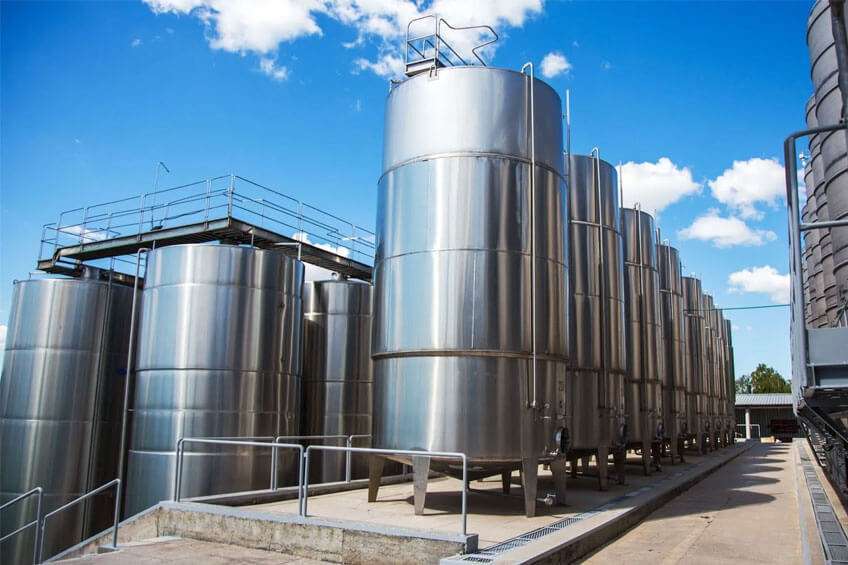
Choosing the appropriate stainless storage tank exporter is critical. It will affect your business in the coming years. It is a very important consideration whether you require tanks to store food, produce pharmaceuticals, or store chemicals or beverages; your choice of supplier will matter. The quality of your products and the success of your storage solutions depend on the supplier you choose.
The stainless storage tanks are a huge investment. That is why supplier selection is even more significant. The market will have many suppliers, each claiming to offer the best products and services. A few of them deal in the distribution of wholesale stainless steel storage tanks. Other people produce custom solutions.
It is important to distinguish between high-quality suppliers and those that are below average. There are several factors that you should examine. Knowledge of what to look for will help businesses avoid costly errors. It also helps develop partnerships with suppliers that align with their requirements and support their expansion.
Define your needs before contacting any bulk stainless storage tank manufacturer. Think about what you are going to store. Consider the necessary capacity. Recording of required certifications. determine certain qualities such as heating jackets, agitators, or special fittings. The needs of different industries are different. The suppliers tend to focus on individual applications.
Food and beverage firms require tanks that meet FDA standards. Such tanks should be designed for sanitary purposes. Pharmaceutical operations require high-quality equipment that meets requirements. Being aware of your needs will help you find knowledgeable suppliers. Understanding your needs helps identify suitable suppliers. It is also useful for identifying the right product lines.
Decide the number of tanks required. Set your budget parameters. Wholesale stainless steel storage tanks are commonly used by businesses that require multiple tanks. The suppliers provide volume discounts. Single-tank purchases may be a reason for higher per-unit costs. This works when the supplier offers higher-quality products or services.
The total cost of ownership should be included in the budget planning process. Do not consider only the purchase price. Factor in delivery costs. Add the cost of installation. Consider the required maintenance structure and the expected lifetime. It is better to pay more upfront and periodically for better quality. This relates to low maintenance and a long service life.
Stainless steel quality varies significantly across grades. Quality suppliers use appropriate grades for various applications. Supplier selection depends on material selection expertise.
• The most commonly used is grade 304 stainless steel. It is corrosion-resistant and made of an affordable material. It is a high-grade material used in water storage tanks. The substance is food safe, and there are hygiene standards. It is rust-resistant under normal water exposure. This grade can also be used to store general food items and drinks.
• Grade 316 stainless steel is corrosion-resistant and is required for the storage of oil and fuel. It also deals with non-degradable petroleum products. The substance does not react with Sulphur compounds in fuel. Grade 316 is also used for storing aggressive chemicals, saltwater, and marine applications.
• Water storage requires materials that are hygienic and resistant to rust. Grade 304 maintains clean, safe, non-contaminated water. The bacteria do not live on the smooth surface. Regular water does not chemically attack this grade.
• Chemical compatibility between oil and fuel storage is required. Over time, petroleum products may incorporate fewer materials in corrosion. Grade 316 has higher resistance and therefore does not degrade. The sulfur and other fuel additives do not damage this grade. The material is also resistant to long-term fuel contact.
The first factor is corrosion resistance. Water causes a variety of corrosion compared with chemicals or fuels. Compare the material density and match it with your stored material. Without sufficient resistance, the tanks fail and become contaminated.
Hygiene is critical in food and beverage applications. Stainless steel has to be food-grade certified. It must be smooth and easy to clean. Grade 304 meets these hygiene requirements. It does not drip the chemicals into the stored products.
Chemical compatibility prevents chemical reactions between materials and stored materials. Each acid and alkali, as well as solvent, demands particular grades. Never select a material without first confirming compatibility.
Environmental conditions also influence material selection. Submarine tanks are exposed to water and soil acidity. Corrosion resistance is increased under these conditions. Grade 316 is typically more suitable for underground work. The above-ground tanks are exposed to weather and temperature fluctuations. There is an impact of UV radiation and rain on material selection. Keep the installation environment in mind.
• Ask suppliers to discuss the material grades that they stock. Good suppliers offer several grades for use. They are supposed to tell you what grade is the most appropriate for your needs.
• Ensure that your suppliers are aware of your storage needs. Write about what you are going to store and the conditions. Based on this information, good suppliers prescribe suitable materials.
• Determine whether suppliers provide material data test certificates. These reports confirm the properties and composition of steel. Steel mill certificates verify the material's quality and authenticity. Reputable suppliers easily give this documentation.
In addition to the stainless-steel structure, the choice of internal linings affects the tank's performance. Different stored materials require different lining materials to protect them effectively. Water storage tanks may require linings different from those used for fuel and chemical storage. The right lining ensures the tank interior does not corrode and lasts much longer.
PVC (Polyvinyl Chloride) linings are very good in terms of chemical resistance. They can be used with water and weak chemicals. PVC is also affordable and easy to install. It ensures high liquid impermeable qualities.
EPDM (Ethylene-Propylene-Diene Monomer) rubber linings are effective for storing water. They are extremely resistant to oxidation and weathering. EPDM is effective in temperature variations. This material is edible and does not pollute stored water.
HDPE (High-Density Polyethylene) linings have excellent chemical resistance. They treat acids and alkalis that are violent. HDPE is very tough and crack-proof. This lining is excellent for fuel storage.
Polypropylene lining has increased temperature tolerance. They can withstand cold and hot storage. Polypropylene is resistant to a vast number of chemicals. It is suitable, especially in industrial chemical storage.
Polyurethane linings are highly abrasion-resistant. They cover tanks that hold suspended solids materials. Polyurethane is flexible and impact-resistant. It is applicable in highly mechanically stressed applications.
Chemical resistance assesses the durability of the lining under packed contact conditions. All lining materials are resistant to various chemicals. Match the lining to your particular stored material. Mismatched linings wear out fast and contaminate products. Our hopper series uses high-quality stainless steel and advanced surface treatments, such as Teflon lining, to improve wear resistance, keep material flowing smoothly, and make cleaning easier. The Teflon lining helps prevent residue buildup, increases durability, and ensures reliable discharge performance in industrial settings.
There is a big difference in temperature tolerance between lining materials. Others can only deal with moderate temperatures. Some survive harsh temperatures, either high or low. Consider the working temperature. Extreme temperatures lead to lining failure, resulting in costly damage.
Weather resistance is a key concern for outdoor and aboveground installations. Some lining materials get damaged by UV radiation. During temperature cycling, stress is applied to the linings. Select weather-resistant linings for outdoor tanks. Especially in advaced solutions like our stainless storage tanks and intelligent instrument systems designed for demanding environments.
Impermeability prevents liquid from entering the lining and contacting the tank wall. Excellent linings offer whole barriers. They prevent moisture and chemical-induced lining. The lining fails on its own due to poor impermeability.
Durability refers to the duration for which wearing linings retain their protective qualities. Good linings do not require frequent replacement. They are not easily broken, peeling, or degrading. Maintaining durable linings reduces long-term maintenance costs.
Quality stainless-steel storage tank suppliers maintain stringent quality control measures. Tanks must be integrity tested by pressure testing. Leak testing conducts tests on the seals. The suppliers should document such tests. They are required to issue certificates confirming that tanks comply with specifications.
Inquire about quality control measures. Determine what is tested before tank shipment. Suppliers with extensive testing programs are quality-committed. They minimize the risk of receiving faulty equipment. This eliminates future operational issues.
Various industries have certain certifications. They should also align with several requirements. Tanks that are used in food-grade applications should be FDA-compliant. They frequently need a 3-A certification of the Sanitary Standard. Pharmaceutical uses will require cGMP-compliant equipment. ASME certification of pressure vessels may be required in chemical storage.
Ensure that prospective suppliers have business-related certifications in your industry. Demand certification of compliance. Do not take verbal promises. Having certified suppliers helps safeguard your company against legal complications. It ensures the equipment meets the required safety and quality parameters.
Quality suppliers maintain detailed records for each tank. These include material certifications, test reports, and manufacturing records. Regulated industries cannot do without traceability. It provides accountability in the event of difficulties.
Enquire with the supplier about the documentation. Determine which paperwork will go with tank deliveries. Professional operations are reflected in full, systematized documentation. It assists in your personal compliance and quality assurance needs.
New firms can offer superior products. Nevertheless, experienced suppliers with a long track record have advantages. Survival in a changing market is reflected in years of business. It demonstrates the capacity to sustain customer relationships. Seasoned suppliers have a better knowledge of general problems. They are aware of how to tackle them.
Determine the operational duration of potential suppliers. Look at their track record. Some companies have been serving your industry for a long period of time; they may have certain requirements. They could offer additional information beyond the sale of tanks.
Talk to the existing customers and get to know their experiences. Confirm the quality of service and delivery. Assess responsiveness to problems and overall satisfaction. The references make sincere revelations. These are facts that are never disclosed in marketing materials.
search reviews and ratings on the internet from independent sources. Consider feedback trends and not the occasional complaint. Supplier reviews remain consistently positive across all sources, and only certain suppliers can be trusted. Negative remarks about similar issues are red flags, especially when they recur.
Well-established suppliers in the industry are repaid by quality and service stability. Determine whether they are members of industry associations. Find out whether they participate in trade shows. Seek recognition and awards. These are indicators of supplier investment in the business. They uphold professional values.
Get colleagues and industry relations to share their experience with suppliers. Most of the best suppliers are recommended by people one knows through word of mouth. These may not necessarily have the greatest marketing presence.
Other suppliers offer standard tank sizes and configurations. Some offer extensive customization. Uniqueness in business requires suppliers capable of developing tailored solutions. These need to achieve certain needs.
Negotiate with possible suppliers. Learn their flexibility. Are they able to alter conventional designs? Are they manufacturing entirely custom tanks? What is the impact of customization options on the prices and delivery times? Responses will show you whether suppliers can really be of service to you. They demonstrate whether suppliers operate solely within defined parameters.
Good suppliers offer engineering services in specification and design. They ask specific questions about your application. They propose the best configurations. They assist in resolving technical problems. Such experience is invaluable in complicated projects. It also comes in handy where there is some uncertainty about what is required.
Assess the technical expertise of suppliers' representatives. Is it possible that they speak about technical specifications intelligently? Are they aware of what your industry needs? Good engineering support implies suppliers partnering with customers. It demonstrates that they do not just accept orders.
Wholesale stainless steel storage tank suppliers should have sufficient production capacity. They have to serve your needs promptly. Suppliers operating at full capacity may be unable to receive your orders on time. Individuals with extra capacity can deliver more quickly.
Lead time calculations can help you schedule deliveries and remain in business. Knowledge of how suppliers develop these timelines helps avoid surprises and disappointments. This is a practical example demonstrating how production capacity affects delivery schedules.
Assume that the supplier has the following capacity:
• Current monthly output: 5 tanks.
• Your order: 10 tanks
• Estimated lead time: 2 months
This is quite a simple calculation. The supplier manufactures 5 tanks in a month. You need 10 tanks in total. Dividing 10 tanks by 5 tanks indicates 2 months of production time. Add processing and shipping lead times.
Such easy calculations are useful to you:
• Plan installation schedules realistically.
• Coordinate with the Contractor and project plans.
• Provide temporary storage as required.
• Budget cash flow of deliveries in phases.
• Determine whether you need multiple suppliers to deliver quickly.
Evaluate the ability of suppliers to expand with your business as it expands. The need to seek new sources in the future, given an initial reliance on a single supplier, creates inefficiencies. Continuity is also beneficial with suppliers that can handle both small initial orders and larger future orders.
Talk about your growth plans with suppliers. The question is how they would handle growing volumes. Their reactions will indicate whether they perceive your relationship as a long-term partnership. Or they would consider it a mere transaction.
There is a wide range of pricing for stainless steel storage tanks. It is based on size, material, features, and customization. Ask to have the costs broken down in detail. Examine resources, workforce, credentials, and other attributes. Open pricing facilitates fair comparisons among suppliers. It makes you know what you are paying.
Avoid excessively good prices. Very low prices normally reflect compromised quality. These may be poor materials or indirect expenses that may arise later. Prices should be differentiated competitively. It must capture the quality and level of service.
Companies that purchase many tanks are advised to negotiate volume discounts. Suppliers of stainless-steel storage tanks are often more flexible on wholesale pricing for bulk orders. Although it may require tank deliveries over time, a batch order now could be a better buy.
Inquire about discounts applicable to different quantities. Compare suppliers' overall costs for bulk purchases. Never look at the prices of individual units. There are occasions when suppliers at a higher unit price are offering a better volume discount. This will make them more cost-effective in general.
Easy payment conditions facilitate cash flow. This is particularly true in cases involving large purchases. Other suppliers demand a down payment. Others receive deposits payable on delivery. The existing suppliers may provide a source of finance. They can offer extended payment terms to valued customers.
Instruct about payment expectations. Ensure conditions are favorable to your business. High demands for unreasonable payments can be evidence of financial instability. They might exhibit unacceptable business conduct. Elastic terms imply suppliers who are assured of their products and relations.
Stainless steel storage tanks are heavy, massive products that require specialized shipping. Enquire about suppliers' packaging and shipping of tanks. Do they use highly experienced freight companies? How does it protect against damage caused during shipment? Bad packing or mishandling may cause tank damage during transit. Suppliers must have developed logistics systems to ensure safe delivery.
Explain the post-delivery situation. Some suppliers provide installation instructions or technical support. Others provide full installation services. Knowing the support available will help schedule the installation and allocate the relevant costs.
The warranty conditions imply the supplier's confidence in the products. Quality suppliers offer comprehensive warranties. Qualified suppliers provide an all-inclusive warranty on manufacturing faults and material breakdown. Read through the warranty time, specifications of coverage, and claims.
Check the responsiveness of the test suppliers in the evaluations by asking technical questions. How quickly do they respond? Are responses resourceful and correct? Continuous technical support assists in troubleshooting and optimizes tank use over their lifespan.
At some point, tanks require connected components, such as valves, gaskets, and other parts. Suppliers are expected to maintain frequent availability of replacement parts at affordable prices. Inquire about the availability of parts and maintenance. The part access in the long run safeguards your investment and prevents tank breakdowns.
When choosing a stainless-steel storage tank supplier, consider manufacturing standards, experience, and levels of quality services. Businesses evaluate wholesale stainless steel storage tank suppliers based on critical parameters, forming joint ventures to ensure quality and sustainability and drive future success.
Summary It takes time, which
READ FULLYou are about to wire a significant sum of money to a company you ha
READ FULLA Chinese ultrasonic welding machine distributor may have more advantages than global ones. The r
READ FULL