

 766


1. Product Overview
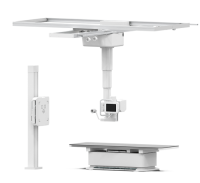
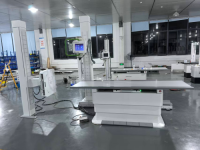
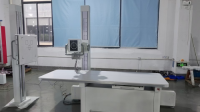
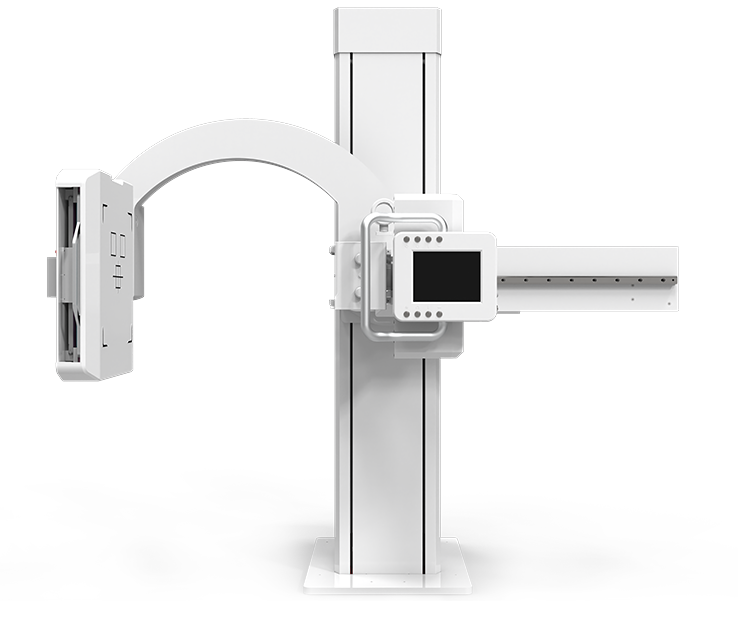
The U-Arm X-Ray Machine is a digital radiographic imaging system designed for diagnostic imaging in hospital radiology departments, medical examination centers, and other clinical settings. Its U-shaped frame and electrically controlled lifting and rotation mechanisms support flexible positioning for a variety of radiographic examinations.
Combined with a radiographic examination table, the system supports imaging in standing, supine, and lateral positions. Its integrated design and high-frequency, high-voltage generator provide a compact and practical solution for routine diagnostic imaging.
2. U-Arm Movement Specifications
The U-arm structure supports electrically controlled movement to accommodate different examination positions.
U-arm lifting range: 480–1680 mm ±3%, electrically controlled
U-arm rotation around the column: −30° to +120° ±1°, electrically controlled
Source-to-image distance (SID): 1000–1800 mm ±3%, electrically controlled
U-arm detector plate rotation angle: 45° ±1°, electrically controlled
X-ray tube rotation angle: 90° ±1°, manually controlled using a handle
3. Digital Imaging System
The imaging system can be configured with a CCD digital detector or a flat-panel detector, depending on the model.
The stated spatial resolution is 0.1 mm. Please confirm this specification with the manufacturer before publication.
The system supports dynamic and static image acquisition, subject to the installed detector and system configuration.
4. Product Features
The U-shaped frame and electric lifting and rotation mechanisms support flexible positioning for different radiographic views.
Multiple imaging positions accommodate standing, supine, and lateral examinations.
Infrared sensing technology supports automatic protection and fault alerts, according to the system configuration.
The integrated structure and combined high-frequency, high-voltage generator help reduce the need for external components and simplify equipment installation.
5. Product Applications
Suitable for general diagnostic imaging in hospital radiology departments, medical examination centers, and other healthcare facilities. Specific clinical applications depend on the system configuration and applicable regulatory approvals.